
Checking Criminal History in Plano
Plano’s police department and City Clerk occupy different Main Street addresses, while county criminal justice offices are in Yorkville. That geography makes the first choice important. Request the police narrative through Plano’s central FOIA channel. Use the Kendall sheriff for current jail custody, the Circuit Clerk for a filed case, and Illinois State Police for public statewide conviction information.
A sound Plano criminal record check follows five steps:
- Identify whether the item is a police report, booking entry, court file, or ISP conviction response.
- Submit a Plano FOIA form to the City Clerk and specify “Plano Police Department.”
- Give the report number, date, time, location, category, and delivery choice when known.
- Check Kendall custody and eMagnus if an arrest or prosecution followed.
- Use ISP under UCIA when the question requires statewide conviction information.
An empty result can mean a misspelled name, an older file, no booking, no filed charge, restricted access, or a sealed matter. Contact the actual custodian before treating a blank screen as proof of no record.
Plano City Clerk FOIA Channel
Plano routes police records through the City Clerk and FOIA Officer at City Hall, 17 E. Main Street, Plano, Illinois 60545. The office can be reached at 630-552-8275 or cmartin@cityofplanoil.gov. Published hours are 8:00 a.m. to 5:00 p.m. on weekdays.
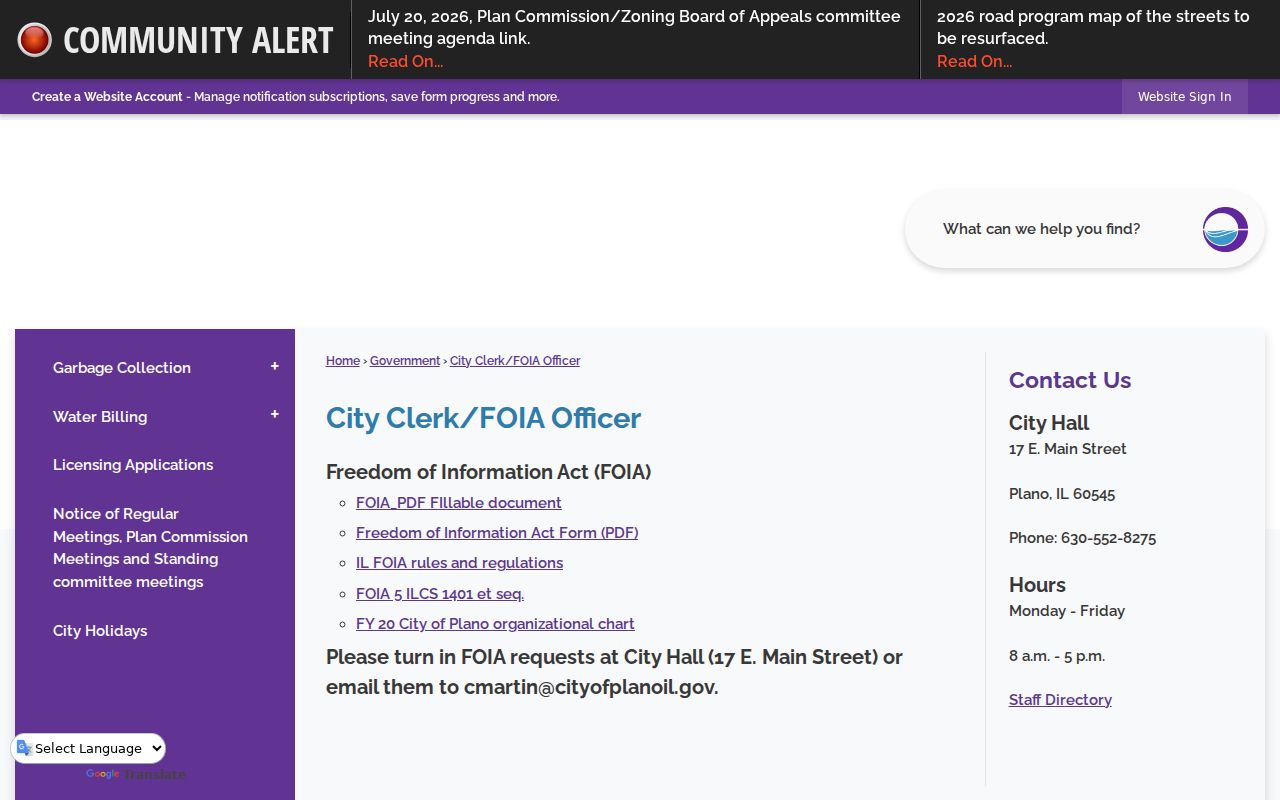
The central page is the correct request doorway even though the police station itself is at another Main Street address.
Write “Plano Police Department” in the custodian or description field. Then identify the police report or case number, incident date and time, place, exact record type, date range, and inspection, copy, or delivery preference. Include commercial-purpose status and contact details as the live form requires. Precision reduces the risk that a police request will be treated as a general city query.
Plano Police Department Records
The Plano Police Department is at 111 E. Main Street, Plano, Illinois 60545. Its non-emergency number is 630-552-3121; emergencies go to 911. Research did not locate a separate official records-unit address or published records hours, so the City Clerk remains the documented FOIA route.
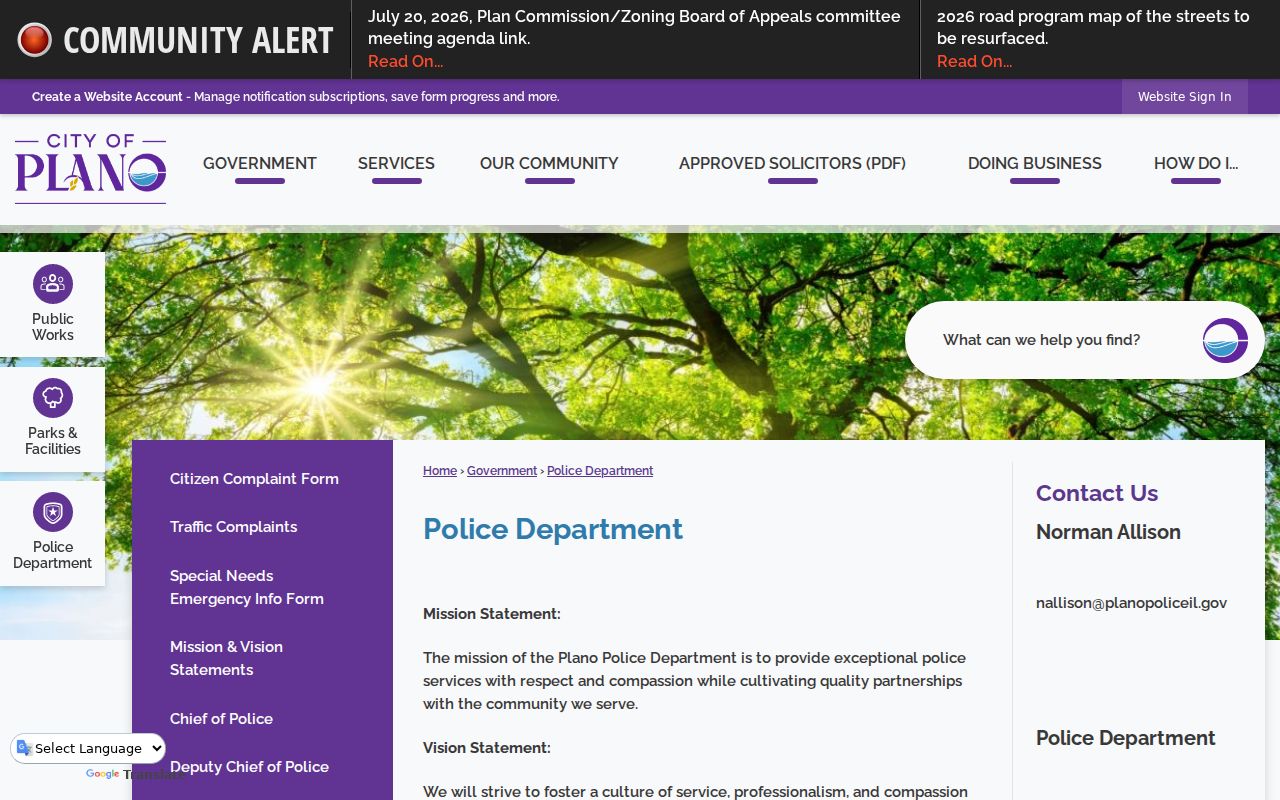
The police page confirms the operational department, while the clerk page supplies the city’s public-record request channel.
Ask for distinct products by name. An incident or offense report, arrest report, citation, CAD or event log, 911 audio, photographs, body-camera video, crash report, and property receipt can have different retention, redaction, and cost rules. A request for a narrow date, place, and report number is more useful than an undefined demand for all records about an event.
Two Plano Main Street Counters
City Hall at 17 E. Main Street handles the central FOIA route. Plano Police operates at 111 E. Main Street. The addresses are close, but the functions are not interchangeable. Send the written records request to the Clerk and identify the police department as the source. Use the police contact for active police service and the clerk contact for the documented public-record process.
This split also explains why a Kendall court query cannot replace Plano FOIA. The clerk of court may show a charge, hearing, and disposition, but it does not hold the full Plano police narrative, local photographs, dispatch record, or other city-created material. Addressing the right counter saves a round of referral.
Plano Arrests and Bookings
Plano publishes no city inmate-search interface. After a Plano police event, check the Kendall County Sheriff’s current custody system if booking may have occurred. The county jail record may identify the received charge, arresting agency, booking facts, and release information. It remains an intake record, not a conviction.
Next search the Kendall Circuit Clerk. An arrest can lead to amended charges, no filing, dismissal, supervision, acquittal, or conviction. Police allegations should never be described as the final result. For county-level custody detail, the Kendall County arrest lookup explains the jail and records-request fallbacks.
A joint investigation involving Plano and the Kendall County Major Crimes Task Force does not create a new public database. Request each record from the agency that created or keeps it. The task force relationship may explain several agencies on a case, but custody remains document-specific.
Plano Case Search at Kendall
Plano has no separate municipal criminal court. Filed felony, misdemeanor, DUI, traffic, and judicial ordinance cases go to the Kendall County Circuit Court at 807 W. John Street in Yorkville. The eMagnus system allows a name or case-number search. Use case number when possible, then compare the filing date, case type, parties, charges, status, and disposition.
Remote access is narrower than courthouse access. If a summary lacks an allowed document, contact the Circuit Clerk at 630-553-4183 or use the viewing room on weekdays from 8:30 a.m. to 4:30 p.m. Ask about copies, certification, archive identification, and current charges. Do not assume that a missing remote document is sealed.
Plano Municipal Court Records
Plano criminal and judicial ordinance files belong to Kendall County Circuit Court rather than a separate city criminal court. City executive records and judicial records follow distinct access rules. The court index answers what was filed and how it ended, while Plano FOIA answers what the police department recorded.
| Court Name | Kendall County Circuit Court, Illinois 23rd Judicial Circuit |
|---|---|
| Case Types Heard | Felony, misdemeanor, DUI, traffic, and filed ordinance cases |
| Case Lookup Channel | eMagnus by name or case number; viewing room and clerk counter as fallbacks |
| What the Docket Shows | Case number, filing, parties, charges, events, scheduling, status, disposition, and sentence fields |
| Copies and Fees | Confirm current copy, certified disposition, and archive terms with the clerk |
“Pending” means the case has not reached a final result. “Nolle prosequi” reflects a prosecutor’s decision not to proceed on that charge at that time. Supervision is an Illinois disposition in which judgment may be withheld while terms are completed. None should be flattened into a generic conviction label.
Plano Crime Data Fallback
Plano does not publish a city annual police-crime archive comparable to the local archives available for Oswego or Yorkville. The documented fallback is the official FBI Crime Data Explorer. Select Illinois, Plano Police Department, and a complete reporting year.
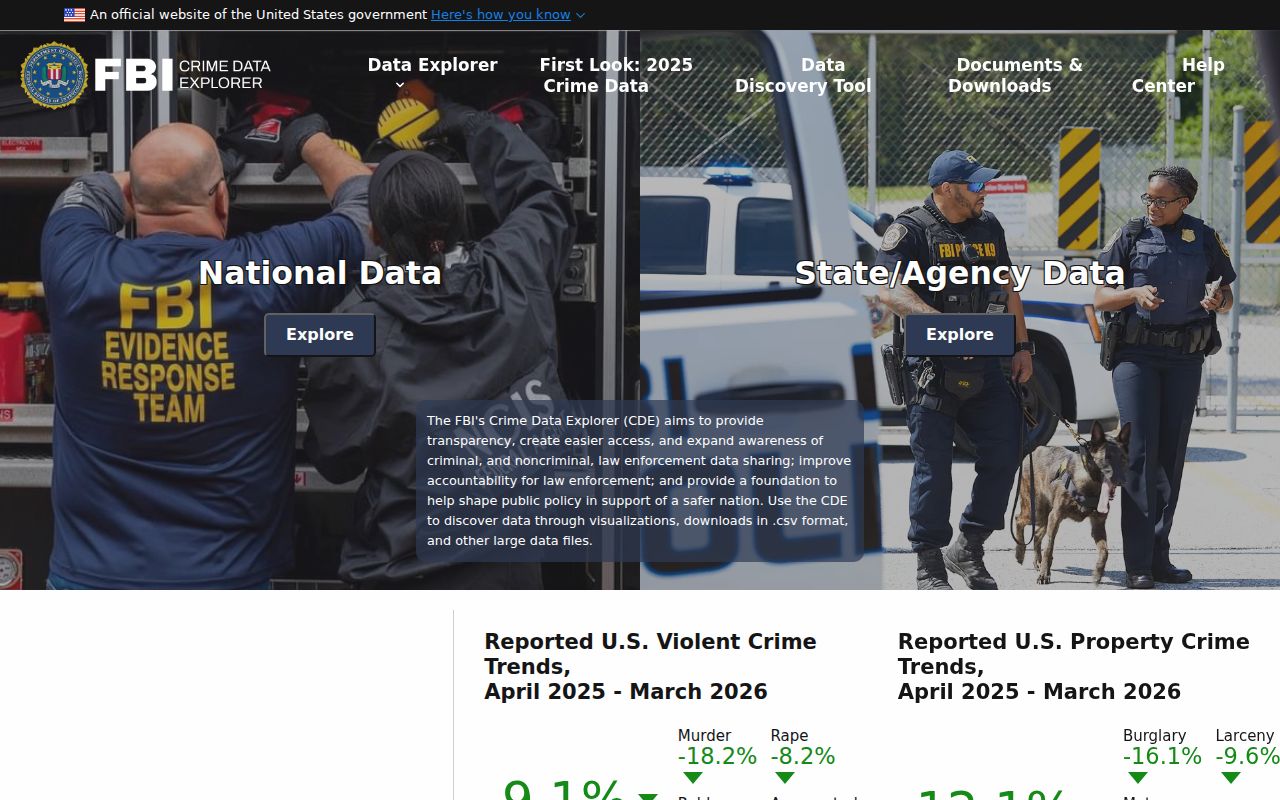
The federal tool provides agency context, but it does not search named Plano criminal records.
Disclose voluntary-reporting and completeness limits. Do not compare a partial NIBRS year with a complete year, and do not mix reported incidents with arrests or convictions. Agency statistics describe workload and patterns. They cannot determine whether a specific person has a report or court case.
Where Plano Records Go
Plano Police creates the local incident and enforcement record. A custodial event produces a Kendall County booking record. A prosecutor’s filed count produces the circuit docket. A qualifying final disposition may later reach the Illinois State Police Bureau of Identification. The stages are linked, but their databases are not the same.
Record flow: Plano Police Department › Kendall County Courts › Illinois State Police Bureau of Identification
ISP’s public UCIA product is conviction information. It does not supply every Plano report or court document, and it does not turn a dismissed arrest into a conviction. For a recent event, begin locally. For the judgment, read the court docket. For statewide conviction scope, use the official ISP process.
Plano History and Record Geography
Plano’s official history records settlement before the formal town, including a saw and grist mill on Big Rock Creek in 1835 and the 1838 sale of land that became Plano.
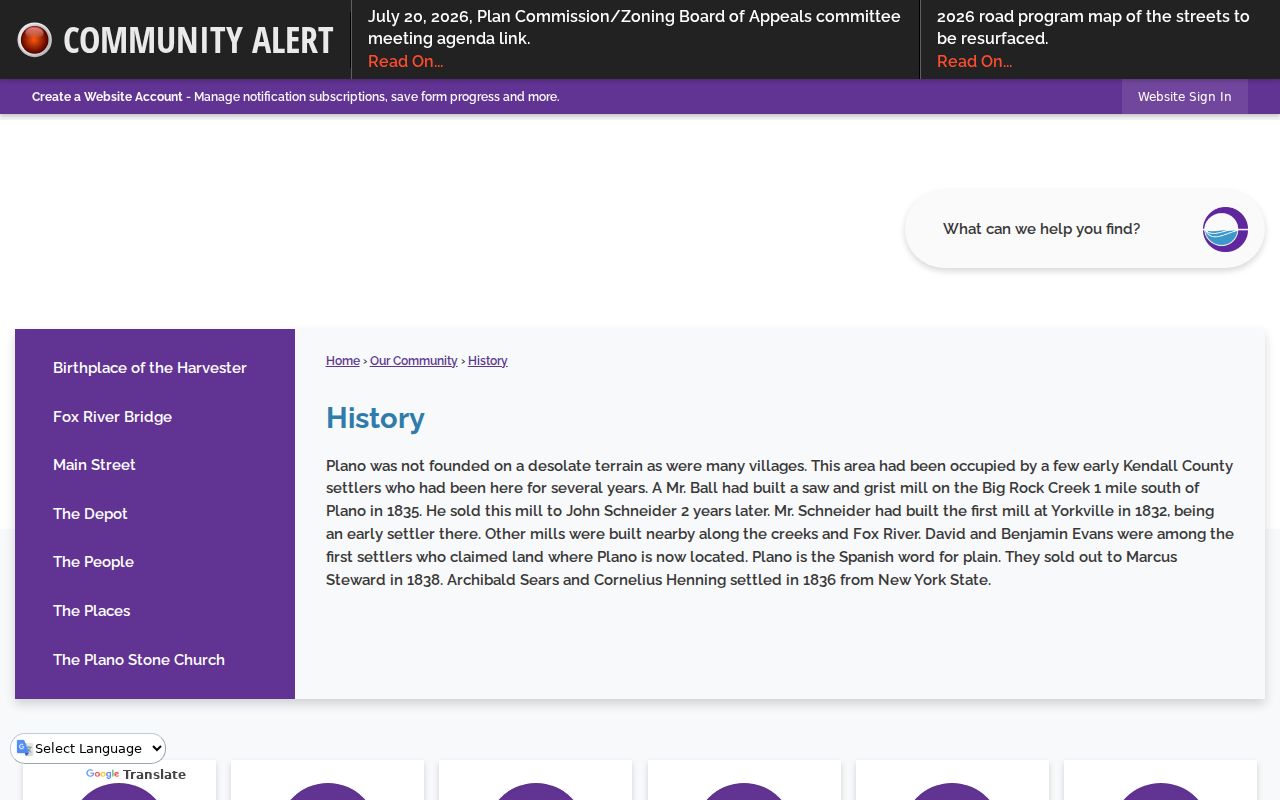
The city’s name comes from the Spanish word for “plain,” while its current police and City Hall addresses preserve Main Street as the local organizing line.
That history supplies geographic context, not a route to modern criminal files. Historical people are not presumed to appear in present systems. Older judicial records, when public and retained, should be identified through the Kendall Circuit Clerk rather than inferred from city history material.
Plano Ordinance or Criminal Record
A local ordinance citation and a criminal court case are not always the same record. First determine whether the matter stayed within a city administrative process or became a judicial filing in Kendall Circuit Court. The city clerk can identify city-held ordinance material, while eMagnus reveals filed court cases.
This distinction matters when a city record exists but no criminal case appears. It also matters when a court docket exists but the city form does not contain the judgment. Ask each custodian for its own product and connect the records through date, incident number, citation, or court case number. Keep the city response and court result separate until those identifiers confirm that both refer to the same Plano event.
Public Access Rules in Plano
Plano police records follow Illinois FOIA through the City Clerk. Kendall judicial records follow court rules and electronic-access policy. ISP conviction information follows UCIA. A FOIA denial can signal an exemption, a different custodian, or a restricted portion, and does not alone prove that the event never happened.
Key Statutes:
5 ILCS 140/3 and 140/7 establish the FOIA process, exemptions, and release of separable public portions.
20 ILCS 2635/3 and /5 govern ISP’s public conviction information.
20 ILCS 2630/5.2 controls adult record expungement and sealing.
Juvenile, sealed, expunged, victim, private, medical, and active-investigation material may be restricted. Ask for a written legal basis and any public portion that can be separated. Verify same-name results with case facts.